
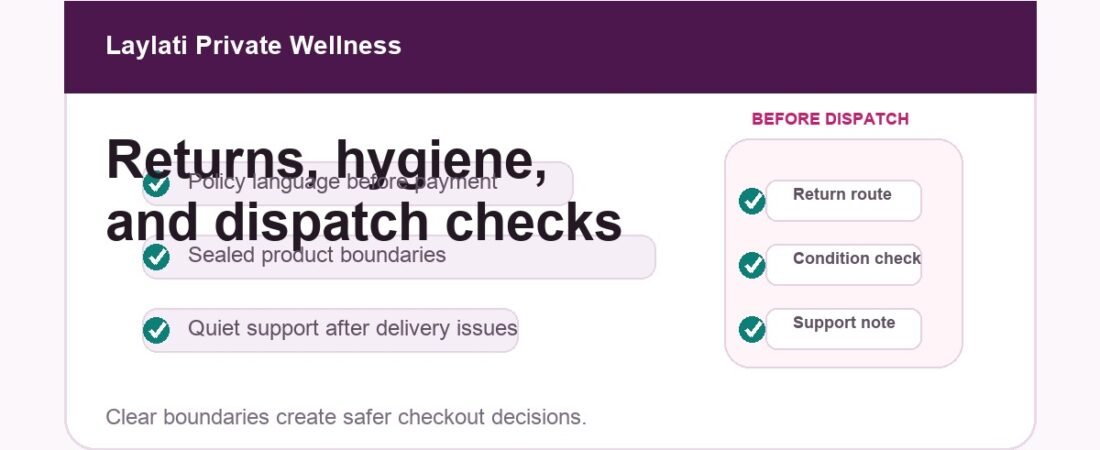
A return policy is not small print when the order is private. It is part of the buying decision. Before a shopper pays, they should know what can be changed, what cannot be returned after dispatch, what happens if a parcel is delayed, and which support channel to use if a question needs a quiet answer.
For private wellness products, the point is not to promise easy returns for every situation. That would be careless. The point is to explain the boundary before checkout, in plain language, so the customer can decide with a clear head. A private order should never rely on vague promises that only become complicated after the parcel leaves the store.
Returns are now part of ecommerce trust
DHL’s current ecommerce trend work treats delivery and returns as part of the sale, not as a back-office detail. Its 2026 report says shoppers are sensitive to trust and choice around delivery and returns, and that premium delivery-and-return expectations are already visible in markets including Saudi Arabia and the UAE.
That matters for Laylati because the shopper is not only judging price. They are judging whether the store will handle the order calmly if something changes: a wrong address, a damaged parcel, an unopened item that needs support review, or a payment question that must be separated from the delivery conversation.
Clear policy language beats generous-sounding language
A generous return promise can look attractive, but it is not always the most honest promise for sealed personal-use products. Saudi Arabia’s Ministry of Commerce consumer guide says a business with an exchange and return policy must adhere to it, and that the policy should be written clearly for the consumer. It also notes that some product types linked to health and safety need limits explained before purchase.
That is the standard Laylati should aim for in public wording: clear before payment, practical after dispatch, and specific enough that support does not have to improvise. The policy should separate three questions: whether the item has shipped, whether the item remains sealed and unused, and whether the issue is a product condition, delivery, address, or payment-support matter.
What to check before the order ships
Before dispatch, the customer still has room to prevent the most common support problems. Check the product photo, product number, price in SAR, delivery city, contact number, and whether the address is complete. If the order involves a larger format, compare the photo and category notes before payment rather than after the parcel arrives.
This is also the right moment to review returns and refunds, shipping and delivery, discreet packaging, and payment methods. Those pages should answer ordinary shopping questions without forcing the customer to describe the product in a public or uncomfortable channel.
After dispatch, the question changes
Once a private wellness parcel has shipped, the support question is no longer only “can I return it?” It becomes more specific: is the parcel unopened, is there a delivery issue, did the item arrive damaged, was the wrong item sent, or is the customer asking about a preference after receiving exactly what was ordered?
Those situations should not be handled with one generic answer. A delivery correction belongs with delivery support. A damaged parcel needs photo evidence and order details. A hygiene-sensitive product that has been opened needs a different review path from an unopened parcel. A good policy is not harsh; it is precise.
What a private store should avoid asking
Support should ask for the order number, contact detail, parcel condition, and the specific problem. It should not ask the customer to restate sensitive product details if the order record already contains them. It should not move the conversation into public comments. It should not require long personal explanations when the real issue is a delivery route, a damaged outer parcel, or a sealed-product boundary.
Baymard’s ecommerce research has repeatedly shown that return and shipping information should be easy to find, including through direct links in the footer. That is useful guidance for private ecommerce: do not hide the policy behind a vague FAQ label. Put the important words where shoppers look for them: returns, refunds, shipping, delivery, and support.
A practical Laylati checklist
Before payment, review these points:
- Is the product number and category correct?
- Does the product photo give enough clarity for the decision?
- Is the SAR price clear before checkout?
- Is the shipping address complete enough to avoid a correction call?
- Have you read the sealed-product and return boundary before dispatch?
- Do you need private support before paying?
If the answer to the last question is yes, use private support before payment. It is better to clarify the order while it is still easy to adjust than to turn a private purchase into a return conversation after dispatch.
The calmest policy is the clearest one
Private ecommerce does not need dramatic wording. It needs operational clarity. A shopper should be able to see the return boundary, the delivery route, the packaging language, and the support option before the order is placed. That is how a store earns trust without overpromising.
For Laylati, the next standard is simple: make the product decision clear, make the parcel language neutral, make the support route quiet, and make the return and refund boundary visible before dispatch.
Before placing a Laylati order, review the return boundary and ask private support any product, delivery, or payment question before checkout. A short pre-dispatch check is cleaner than a complicated support request later.