
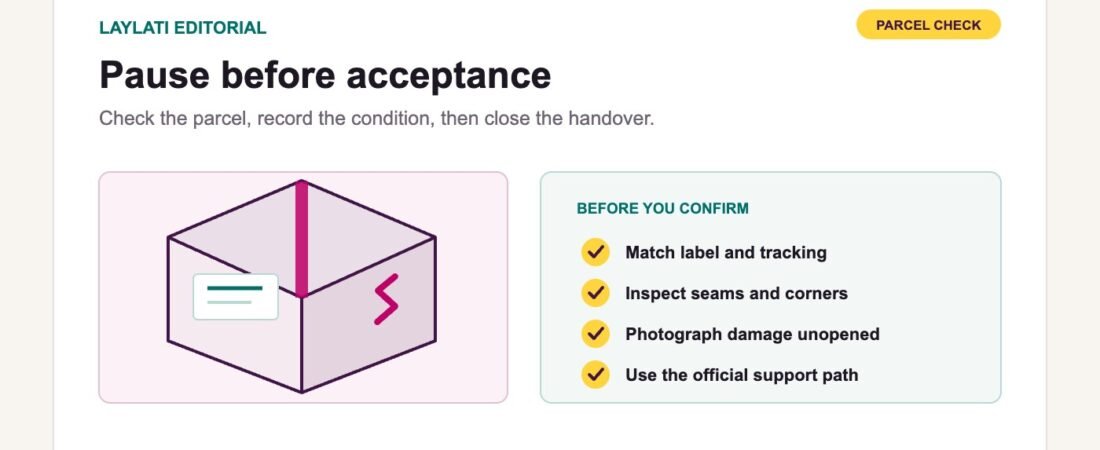
A parcel does not have to be crushed beyond recognition to deserve a pause. A split seam, wet corner, fresh tape over an older seal, puncture, or mismatched label can be enough to make the handover worth checking carefully.
Private orders create an extra temptation to accept quickly and move the box out of sight. That saves a few seconds, but it can also remove the best opportunity to document the parcel before the delivery code is shared or the receipt is confirmed.
Look at the parcel before sharing the delivery code
In March 2025, Saudi Arabia’s Ministry of Commerce reminded online shoppers that giving the courier a delivery code is an acknowledgement that the products were received in an orderly and sound condition. The Ministry advised checking the shipment, matching it to the order, and reviewing the condition before giving the code.
That does not mean every courier can wait while a customer conducts a full product inspection. Delivery procedures differ. It does mean the external parcel should get a deliberate first look before the handover is closed.
Check all sides, not only the face carrying the label. Look at the base, corners, seams, tape, and any area that appears compressed or wet. If the parcel is leaking, has a sharp object protruding, or cannot be handled normally, step back and contact the carrier rather than opening it.
Match the parcel to the order without exposing the purchase
Start with ordinary delivery information: recipient name, delivery city, store or sender, carrier, tracking number, parcel count, and the order reference if one is shown. Compare those details with the store confirmation or official tracking page.
A private shipment does not need a revealing description on the outside. Neutral wording is appropriate. The useful question is whether the reference and carrier details belong to the order you are expecting, not whether the product name is printed on the box.
If the label belongs to another recipient, the tracking number does not match, or two parcels were expected and only one arrived, do not rely on a verbal explanation alone. Ask the courier or carrier to record the issue through its official process, and contact the store through the support route on its own website.
Photograph the unopened external parcel
When the parcel looks damaged or opened, a short photo record is more useful than a long description written later. Take one image of the whole parcel, one of the shipping label and tracking reference, and close-ups of each torn, crushed, wet, punctured, or retaped area.
Keep the parcel unopened while taking those first images. Include enough surrounding area to show where the damage sits on the box. If the carrier application offers an in-app damage report, use it, but keep your own copy as well.
Do not post the photographs publicly. A shipping label can reveal a name, phone number, address, barcode, and tracking reference. Send the images only through the carrier’s or store’s official private support path, and mask details that the recipient does not need to disclose.
Separate outer wear from a broken seal
Neutral outer packaging is a transit layer. A scuffed corner or dusty surface does not automatically mean the product inside is damaged. The stronger warning signs are changes that affect the parcel’s closure or structure: a seam pulled apart, an opening large enough to reach the contents, tape that no longer joins both sides, heavy crushing, liquid penetration, or a label placed over another recipient’s label.
Describe what you can see rather than guessing what caused it. “The lower seam is open by three centimetres” is more useful than “the courier opened my order.” A factual record gives the store and carrier something they can investigate.
Also distinguish the neutral courier box from the sealed retail package inside. If the outer parcel is worn but the inner package is complete, clean, and sealed, the resolution may differ from a case where the inner seal is broken or an item is missing.
Ask for the official acceptance or refusal process
If the external damage is serious, ask the courier what the carrier’s recorded refusal or damaged-delivery process requires. Do not hand over the delivery code first and try to reverse the acceptance afterward. Do not sign a blank screen or confirm a condition you have not been allowed to observe.
The Transport General Authority’s postal customer rules say recipients should verify that postal items are delivered in a safe and sound condition before signing for receipt. The same rules require licensed providers to publish service, complaint, compensation, refund, and undelivered-item procedures.
This is a practical checklist, not a legal ruling on a particular parcel. Carrier terms, seller policies, proof requirements, and claim deadlines can differ. Use the current official process for the carrier named on the tracking record.
If the problem appears after acceptance
Some damage is not visible until the neutral outer parcel is opened. If an item is missing, the inner package is unsealed, or the product is visibly damaged, stop the unpacking process and take photographs before discarding any box, insert, seal, or label.
For private wellness products, do not use, wash, charge, assemble, or alter an item that may need to be reviewed. Hygiene-related return limits can become relevant after a seal is broken or a product is used. Read the store’s current return policy and contact support before taking another step.
Send a concise record: order reference, tracking number, delivery date and time, carrier, what was visible before opening, what appeared after opening, and the photographs. Keep the description factual and place sensitive product detail inside the private conversation rather than the email subject or a public review.
Use the store and carrier complaint paths in order
Start with the seller and the licensed postal provider, because each controls a different part of the record. The store can check the packed order and product condition; the carrier can check scans, handover, parcel handling, and any delivery report.
TGA’s customer-rights rules include damaged or incomplete postal items within the complaint framework. Saudi Post | SPL also publishes a separate compensation policy with document requirements, exclusions, and time limits. Those terms are specific to the service used, so read the current policy rather than assuming that every carrier or shipment has the same coverage.
For a Laylati order, review shipping and delivery, the returns and refunds policy, and the neutral packaging standard. Use private order support for a parcel issue, and read the delivery-message verification guide before responding to an unexpected link.