
A failed delivery is not a small inconvenience when the order is private. For a normal parcel, a missed call or a wrong building number creates delay. For a private wellness order, the same mistake can create a customer-service problem: the shopper wants the package corrected quickly, but does not want to explain sensitive details to a courier, a family member, or a public chat channel.
That is why address correction belongs in the customer experience, not only in the shipping department. A discreet store should make the next step clear before checkout, then handle the rare failed delivery with calm, neutral language. The customer should know what information is needed, what information is not needed, and how the order will be updated without turning a private purchase into a long conversation.
Delivery trust is now part of the sale
DHL’s 2026 ecommerce trend work makes the point plainly: shoppers look at delivery and returns before they decide whether a store feels trustworthy. Its current report says many customers will leave a purchase if the delivery options or provider do not feel right, and that businesses now treat delivery and returns as a direct sales driver rather than an afterthought.
For private wellness, that trust question becomes sharper. A customer may accept a slightly slower dispatch if the store gives a better answer on privacy, address handling, and neutral updates. The promise should not be dramatic. It should be operational: clear address requirements, plain packaging language, careful notification wording, and private support that asks only for the details needed to solve the delivery issue.
In Saudi Arabia, the address is the first privacy step
Saudi Post SPL describes the National Address as a precise location identity and says its use becomes mandatory from January 1, 2026. SPL also explains that the Short Address is easy to memorize and that using the address can accelerate delivery without the need for further calls. For ecommerce orders, that matters because fewer correction calls usually means fewer awkward follow-ups.
Before placing a private wellness order, a shopper should check the city, district, building number, postal code, and Short Address where available. The order should also include a contact number that can receive courier updates. That does not mean the customer should write product details in the delivery notes. Delivery notes should stay practical: gate instructions, preferred contact window, apartment access, or a request for a neutral handoff where the courier flow allows it.
What a store should ask when delivery fails
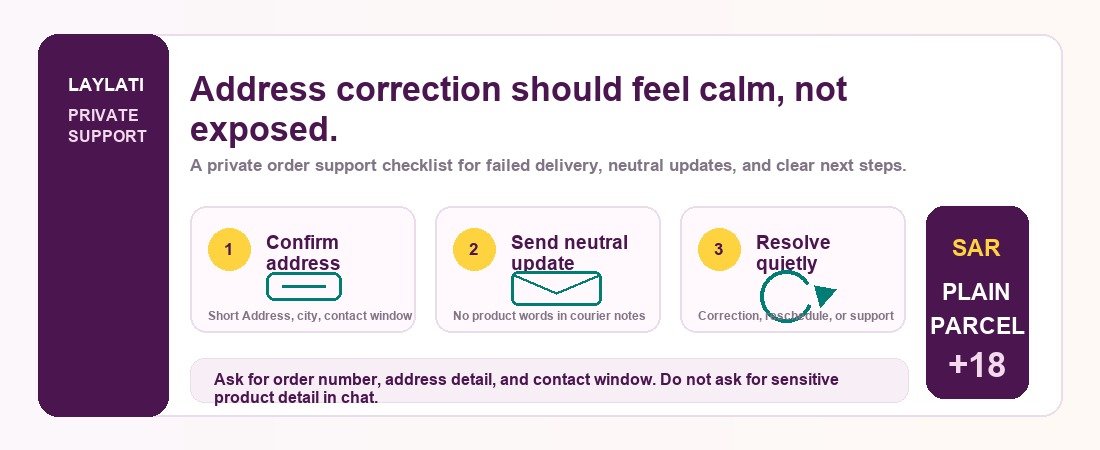
When a delivery attempt fails, support should keep the conversation narrow. A good private-support message asks for the order number, the correct address detail, a reachable phone number, and a preferred contact time. If the customer needs a reschedule, support can ask whether the same address remains valid or whether a correction is required before the next attempt.
That is enough for most cases. The support agent does not need to ask the customer to repeat the product name in a chat. The courier note does not need the product category. The customer should not be pushed into explaining why the order is private. The store already has the order record; the delivery correction should use operational language, not customer embarrassment as a verification method.
What should stay out of delivery notes
The most common mistake is trying to solve a privacy problem by writing too much. Notes such as “do not tell anyone what this is” can attract more attention than a simple neutral instruction. It is usually better to write a normal delivery note: call before arrival, leave with reception only if approved, use the main gate, or deliver during a specific time window.
The same rule applies to support channels. A private wellness store should not ask customers to send unnecessary screenshots, personal explanations, or product-sensitive messages when the issue is simply an address correction. Saudi data-protection guidance from SDAIA emphasizes that organizations should understand the personal data they process, publish privacy notices, and handle personal data with clear purpose and safeguards. A store does not need to turn every delivery question into extra data collection.
A quiet failed-delivery flow
A practical flow has four steps. First, confirm whether the parcel is still with the courier or returned to the store. Second, confirm whether the same address can be used with a corrected detail. Third, send a neutral customer update that says the delivery information has been corrected or that support is arranging the next step. Fourth, record the support action against the order so the customer does not have to repeat the same private explanation later.
For Laylati, that means every private order page should make three things visible before payment: discreet outer packaging, local SAR pricing, and a clear support route if the address needs correction. The customer should be able to move from the Saudi National Address checklist to discreet packaging, then to shipping and delivery without guessing what happens after checkout.
Where payment and delivery meet
Address handling also affects payment. If a customer is using a method that requires extra confirmation, the store should avoid mixing payment questions and delivery correction in one messy thread. The shopper should be told what is needed for the payment route, then what is needed for the parcel route. The two may happen near each other, but they should not blur into a confusing support exchange.
This is why a clear pre-checkout checklist is useful. Confirm the SAR total, the delivery city, the correct address detail, the contact number, and whether support must answer a question before payment. If the order is already placed, keep the correction message simple. If the customer is unsure before payment, use the payment choices guide and the neutral delivery messages guide before completing the order.
The customer should feel in control
Private ecommerce works best when the customer feels that nothing is being improvised. The product page should be clear. The checkout should be calm. The delivery page should explain what is visible on the parcel. The support page should show how to ask a private question without adding unnecessary personal detail.
A failed delivery will still happen occasionally. The difference is whether the store treats it as a public problem or a quiet service issue. For a private wellness order, the right answer is quiet, specific, and boring in the best sense: correct the address, keep the parcel neutral, update the customer, and do not ask for more information than the order needs.
If you are placing a Laylati order and the address may need correction, contact private support before payment. A short address check is easier to handle than a failed delivery after dispatch.