
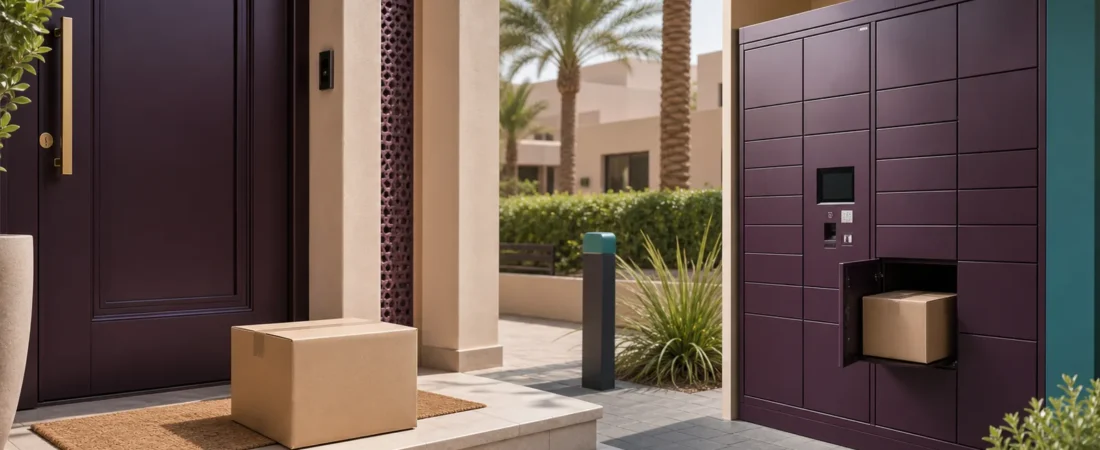
The most private delivery method is not always the one with the least contact. A parcel locker can keep a courier away from the front door, but it also creates a collection deadline, a journey, and a dependency on the correct mobile number. Home delivery is simpler for many shoppers, yet it can be awkward when a shared household, reception desk, or busy entrance controls access.
Saudi Arabia already has the infrastructure for both approaches. Saudi Post | SPL describes three ecommerce delivery channels: doorstep delivery, postal branches, and parcel stations. Its parcel-station service allows round-the-clock collection after the recipient receives the shipment number, access code, deadline, and station location by SMS. Those are useful options, but availability still depends on the seller, courier, city, parcel dimensions, and the delivery choice actually shown for the order.
For a private purchase, the better question is not “Which method sounds more discreet?” It is “Which method gives this recipient the most control from dispatch to handover?”
Start with access, not the delivery label
Think through who can reach the parcel at each stage. With home delivery, that may include a family member, building guard, reception desk, housekeeper, or neighbour. With a locker or pickup point, it may include anybody who can read the collection message or access the phone that receives the code.
Neither route is automatically private. A neutral outer parcel matters in both cases, as do a limited shipping label, a reliable tracking record, and notifications that do not reveal the product. Laylati explains its outer-parcel standard on the discreet packaging page.
Before choosing, identify the point where you have the least control. If the front door is shared but your phone is private and the station is easy to reach, collection may be practical. If your phone is shared, mobility is limited, or the station deadline will be difficult, a planned home handover may be safer and simpler.
When home delivery is the practical choice
Home delivery usually requires fewer steps. The parcel moves to the address already attached to the order, and the recipient does not need to travel or fit collection into another schedule. It can be the better route when the address is accurate, the recipient can answer the courier, and the entrance is under reasonable control.
It also works well for a parcel that is too large for a locker or is excluded from self-service delivery. SPL states that its parcel stations have size and weight limits, while individual couriers may apply different eligibility rules. A shopper should never assume that every product or parcel can be redirected.
The weak point is an uncontrolled handover. A courier may call while the recipient is at work, leave the parcel with another person, or ask for directions in a public lobby. Reduce that risk before dispatch: verify the Saudi National Address fields, use a mobile number you can answer, and add only the building details needed to find the entrance. Do not put sensitive product wording in delivery notes.
When a parcel locker or pickup point may help
A locker or staffed pickup point separates collection from the home entrance. That can be useful when household deliveries are routinely opened by somebody else, a reception desk records every parcel, or the recipient cannot predict when a courier will arrive.
Self-collection also changes the timing. SPL says its parcel stations operate 24 hours a day, seven days a week, and the collection SMS includes the last collection date. That flexibility is valuable only when the station is genuinely accessible and the deadline can be met. A locker across the city is not a privacy improvement if reaching it requires a long trip or help from another person.
The phone becomes the key. The correct recipient number must be attached to the shipment, the message must arrive, and the code must remain private. A shared lock screen, forwarded SMS, or inaccessible SIM can undermine the advantage. Check the number before dispatch and treat the collection code like a delivery code: use it only at the official station or handover point.
Compare the complete journey
Use these questions instead of choosing by label alone:
- Household access: Who normally receives or sees parcels at the delivery address?
- Phone access: Is the mobile number private, active, and able to receive the collection message?
- Travel: Can the recipient reach the station independently and during the collection window?
- Parcel eligibility: Does the carrier permit this shipment size, service, and destination to use a locker or branch?
- Address quality: Is the National Address complete enough for a clean home-delivery attempt?
- Handover control: Can the recipient inspect the outer parcel before confirming receipt?
- Support path: Is there an official way to correct the address, change the route, or report a failed attempt?
A route that scores well on only one question can still fail elsewhere. The best choice is the one that reduces the number of people, messages, and last-minute corrections involved.
Check whether the option is actually offered
SPL’s ecommerce network shows that doorstep, branch, and parcel-station delivery exist in Saudi Arabia. That does not mean every Saudi online store or every courier offers all three on every order. The actual service is the method displayed at checkout or confirmed by the seller and carrier for the specific shipment.
Do not enter a locker address copied from a map unless the checkout or carrier formally supports that route. A parcel station normally needs to be selected through the provider’s service flow so the shipment is coded for that station. An ordinary address change can create a failed attempt rather than a valid locker delivery.
If an option is unclear, use Laylati’s private order support before paying or before dispatch. Ask which delivery methods are available in the city, whether the parcel is eligible, which courier will handle it, and how a supported route change should be requested. The answer should be recorded against the order, not left in an informal message.
Keep notifications and collection neutral
The route can be discreet while the notification is not. Review the phone’s lock-screen preview, shared email access, and saved contact name before ordering. A tracking message should identify the shipment sufficiently without describing the product.
When a collection or redelivery message arrives, open the seller or courier independently rather than trusting an unexpected link. Laylati’s guide to verifying a delivery message explains how to compare the carrier, tracking reference, and requested action before sharing information or paying a new fee.
At either a doorstep or collection point, match the recipient, tracking reference, and parcel count. Inspect the outer box before confirming receipt. If the parcel is open, wet, crushed, retaped, or addressed to another person, follow the damaged or opened parcel checklist rather than discarding the packaging.
A simple decision rule
Choose home delivery when the address is accurate, the entrance is controlled, and you can receive the courier without involving other people. Consider a supported locker or pickup option when home access is the larger privacy risk, your phone is secure, and collection is convenient within the stated deadline.
In both cases, verify the method available for the actual order. Laylati’s shipping and delivery page is the reference point for current store terms; private support can confirm city- and order-specific options before dispatch. Privacy comes from a controlled process, not from the name of the final mile.