
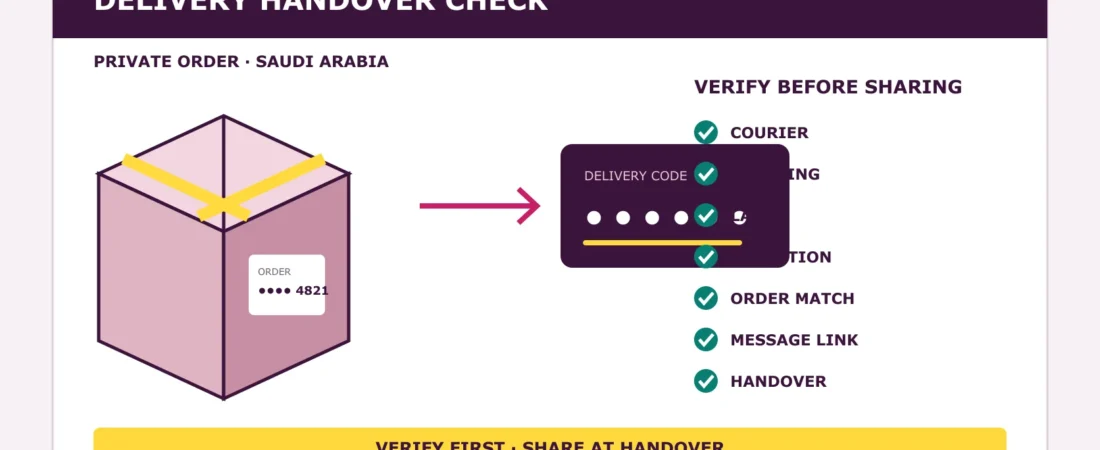
A parcel delivery code can look like a minor detail: four or six digits sent by text just before the courier arrives. In practice, that code may be the final handover step. Sharing it too early can make a simple delivery problem harder to document.
Saudi Arabia’s Ministry of Commerce has advised consumers to verify that a shipment matches the order and to check the product’s condition and quality before giving the delivery code to the courier. That is a useful starting point, but the code is only one part of the check. The sender, courier, tracking record, outer parcel, and purpose of the message also need to agree.
This seven-point checklist is designed for private online orders in Saudi Arabia. It is consumer guidance, not legal advice, and it does not replace a courier’s published inspection or handover procedure.
1. Identify what the code is for
Start with the wording around the number. A courier handover code, a payment verification code, a bank one-time password, and an account-login code are not interchangeable. They may arrive through the same phone, but they authorise different actions.
A genuine delivery message should make its purpose understandable. It may identify the courier, shipment, tracking reference, or expected handover. A bank or payment code may show a merchant, amount, transaction type, or warning not to share it. Do not decide by the number of digits alone.
If the message is unclear, do not read the code aloud or forward a screenshot. Open the order confirmation you already saved and compare the sender, order reference, and delivery stage. A store or courier should not need your card PIN, banking password, or login verification code to hand over a parcel.
2. Match the order, courier, and tracking state
Before the courier reaches the door, compare four details: the store order number, the courier name, the shipment or tracking reference, and the delivery status. The delivery date and recipient mobile number should also make sense for the order you placed.
Use the store’s saved confirmation and the courier’s official tracking page rather than a new link received in an unexpected message. Laylati’s guide to verifying a delivery or tracking message explains how to compare the route without exposing more personal information.
A mismatch does not automatically prove fraud. A store may use a fulfilment partner, and a courier may update a reference during routing. It does mean that the code should wait until the store or courier explains the difference through a known contact channel.
3. Verify suspicious links before opening them
Delivery-themed messages often create urgency: pay a small redelivery fee, correct an address, choose a new time, or open a tracking page immediately. The National Cybersecurity Authority’s consumer guidance recommends checking sender identity and treating unfamiliar links in messages with caution.
Saudi Arabia’s National Cybersecurity Authority also offers Tahqaq, a service for checking circulated links before visiting them. It can help examine an unfamiliar URL, but it does not turn an unverified message into a genuine order update. The safer route is still to open the store or courier site independently and enter the tracking reference there.
Do not make an unexpected payment from a message link. If a charge was not shown at checkout or in the store’s shipping terms, ask the store through its published support route first.
4. Check the visible outer parcel before sharing the code
A neutral outer parcel should protect privacy without hiding the information needed for delivery. Check the recipient name, mobile number or masked number, delivery area, shipment reference, package count, and courier label. The label should correspond to the order in front of you.
Then inspect the condition that is visible without opening the parcel: broken or replaced sealing tape, punctures, water damage, crushing, an exposed inner package, or a parcel that feels obviously inconsistent with the recorded size or count. Laylati’s damaged or opened parcel checklist explains what to record before deciding the next step.
Neutral packaging should not display a sensitive product description on the outside. It still needs adequate routing and recipient information. See the guide to neutral parcel labels for the distinction.
5. Separate an outer check from an opening procedure
Checking the visible parcel is not the same as opening it before acceptance. Inspection rules can differ by courier, seller, payment method, and shipment type. Do not assume that every driver can wait while a sealed parcel is opened, and do not force an opening that conflicts with the carrier’s procedure.
If the outer parcel does not match the order, appears damaged, or cannot be identified, pause before sharing the delivery code. Ask the courier what refusal, damage-report, or inspection procedure applies, then contact the store through a known route. Laylati’s guide to checking a courier for a Saudi private order lists the public details worth confirming.
The practical rule is simple: verify what can be verified at handover, and ask about the published procedure for anything that requires opening or a formal damage report.
6. Share the delivery code only at the handover
A courier may call ahead to confirm the address or arrival time. That does not normally require the final handover code while the parcel is still elsewhere. Keep the code private until the courier, parcel, and order are present and the visible checks are complete.
Pause if someone asks for the code by telephone or WhatsApp long before arrival, says the parcel cannot be shown first, or pressures you to act before you can compare the label. Use the courier’s official support number or the store’s private order support rather than continuing inside an uncertain conversation.
When you are satisfied that the delivery matches the order and the handover procedure, share only the delivery code requested for that shipment. Do not share other verification messages that happen to arrive at the same time.
7. Preserve a clean record when something is wrong
If the shipment is damaged, mismatched, or delivered by an unexpected courier, record the facts without publishing private information. Photograph the outer condition and label while covering the full address, telephone number, barcode, and delivery code. Note the time, courier name, tracking status, and the reason you paused or refused the handover.
Keep the order confirmation, tracking screen, and support messages together. A short factual record is more useful than a long argument at the door. Do not post the full label or code on social media, and do not send identity documents unless a verified support process explains why they are required.
Review Laylati’s current shipping and delivery guidance before placing an order so the expected courier contact, packaging approach, and support route are familiar before handover day.
A one-minute handover checklist
- Does the message clearly say this is a parcel delivery code?
- Do the order number, courier, tracking reference, and delivery state agree?
- Did you avoid unfamiliar payment or address-correction links?
- Does the visible label match the recipient and shipment?
- Is the outer parcel sealed and free from obvious damage?
- Have you checked the courier’s procedure before any opening or refusal?
- Is the courier physically present and ready to hand over the parcel?
For a private order, discretion works best when the process is predictable. Verify first, share the delivery code at handover, and use a known support route whenever the shipment or message does not match.
Sources
- Saudi Ministry of Commerce, guidance on checking a shipment before sharing its delivery code
- National Cybersecurity Authority, Tahqaq link-checking service
- National Cybersecurity Authority, Consumer Cybersecurity Guidelines for E-Commerce
- Communications, Space & Technology Commission, SMS fraud awareness
- Saudi Ministry of Commerce, Guide to Consumer Rights and Responsibilities